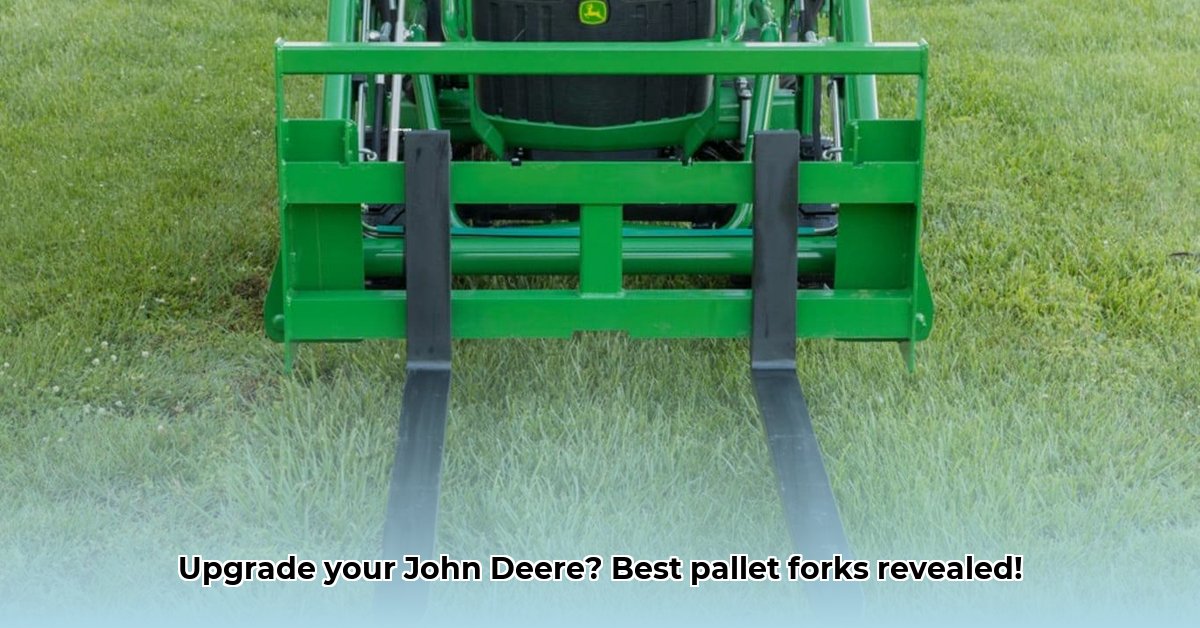
Choosing the right pallet forks for your John Deere tractor is crucial for efficient and safe farm operations. This guide compares two leading options: the John Deere AP12/AP13 series and the PalletForks.com standard series (names altered for clarity), helping you determine the best fit for your needs and budget. We'll analyze key features, compare performance, and offer a straightforward decision-making process. For more options, check out this helpful resource on pallet forks for compact tractors.
John Deere AP12/AP13 Series: Power and Precision
The John Deere AP12/AP13 series is renowned for its robust construction and high lifting capacity. The AP12 boasts a maximum capacity of 10,000 pounds, ideal for moving exceptionally heavy pallets. Lower capacity models within the range, such as the 3750 and 5500-pound options, provide flexibility for varied workloads. A key differentiator is the tine configuration: the AP12 features fixed tines, providing superior precision lifting on level surfaces, while the AP13 utilizes floating tines that adapt to uneven terrain, enhancing stability and mitigating soil compaction. This adaptability is advantageous in fields with varied topography.
PalletForks.com Standard Series: Versatility and Value
The PalletForks.com standard series presents a compelling alternative, emphasizing versatility over sheer lifting power. While its maximum capacity may be lower (4000 pounds), its adaptability shines. Beyond pallet handling, it can be effectively used for moving hay bales or even as a makeshift trailer hitch, extending its functionality and representing a potentially cost-effective approach for farmers with diverse material-handling needs. This flexibility reduces the need for purchasing multiple specialized attachments, streamlining operations and potentially lowering long-term costs. However, Class II pallet fork blades are usually sold separately, which should be considered when budgeting.
Comparative Analysis: A Side-by-Side Look
The following table directly compares the two series across key performance criteria. Remember that precise pricing and maintenance costs will vary based on the supplier and specific model.
| Feature | John Deere AP12/AP13 Series | PalletForks.com Standard Series |
|---|---|---|
| Weight Capacity | Up to 10,000 lbs (4536 kg) – powerful, suitable for very heavy loads | 4000 lbs (1814 kg) – sufficient for many applications |
| Tine Configuration | Fixed (AP12) or Floating (AP13) – options for different terrain | Class II (sold separately) – offers flexibility with additional purchases |
| Versatility | Primarily pallet handling, specialized for heavy-duty use | Pallet handling, hay bale moving, potential trailer hitch functionality |
| Cost | Varies depending on model and supplier | Varies depending on supplier |
| Maintenance | Varies depending on model and supplier | Varies depending on supplier |
| Durability | Generally high, known for robust construction | Varies depending on materials and manufacturing quality |
Aren't you curious to know which option offers the best return on investment considering factors like maintenance and operational efficiency? It's a crucial question for long-term profitability.
Safety Considerations: Prioritizing Operator Well-being
Safety is paramount in agricultural operations. Both brands incorporate safety features and include detailed operator manuals. Thorough review of these manuals before operation is critical. Regular equipment inspections, adherence to weight limits, and comprehensive operator training are non-negotiable aspects of safe pallet fork usage. Furthermore, investing in additional safety training programs can significantly reduce risk. Always choose forks with verifiable safety certifications.
Choosing Your Pallet Forks: A Step-by-Step Guide
Selecting the appropriate pallet fork requires careful consideration of your specific needs. Follow this step-by-step process:
- Assess your workload: Determine the heaviest load you routinely handle. This directly dictates the minimum required weight capacity.
- Define your tasks: Will you primarily move pallets, or will there be other material-handling requirements?
- Budgeting: Set a realistic budget accounting for both the initial purchase price and anticipated maintenance costs.
- Maintenance: Research warranty information and the availability of local service providers. Downtime needs to be minimized.
- Compare quotes: Obtain quotes from multiple suppliers to compare pricing and ensure you're getting the best value.
Did you know that proactive maintenance can increase the lifespan of your pallet forks by up to 20%? This results in significant cost savings over time.
For heavy-duty, high-volume pallet handling in level terrain, the John Deere AP12 offers precision and power. For uneven terrain and adaptability, the AP13 is preferred. The PalletForks.com standard series presents a cost-effective, versatile solution for varied tasks and lighter loads.
Conclusion: Making an Informed Decision
Choosing between the John Deere AP12/AP13 and PalletForks.com pallet forks ultimately depends on your specific operational needs and budget constraints. Thorough research is vital. Contact multiple vendors to gain precise specifications, pricing, and availability information before making a final purchase. This diligent approach ensures the selection of a pallet fork perfectly aligned with your farm's unique requirements and promotes operational efficiency and safety.